
A worked example from the Terra40® engagement desk
By Fuzieh Jallow, Founder and CEO, Terra40® · July 21, 2026
Organizations that come to Terra40® usually arrive with a version of the same question. They know the forum matters. They know their people should be there. What they cannot picture is what a produced presence actually looks like once it moves past a single panel and a name badge.
So here is one, in full.
In July 2026, Terra40® was asked to develop a concept for a produced presence at UNGA High-Level Week 2027 for a Brazilian human rights organization with a standing agenda across the UNFCCC, the CBD, and the UN human rights mechanisms. What follows is that concept, with client identity and commercial terms removed. We publish concept work of this kind from time to time, because it answers the question better than any capabilities deck can: this is the level of thinking that goes into a Terra40® engagement before a single room is booked.
Why High-Level Week is a different problem
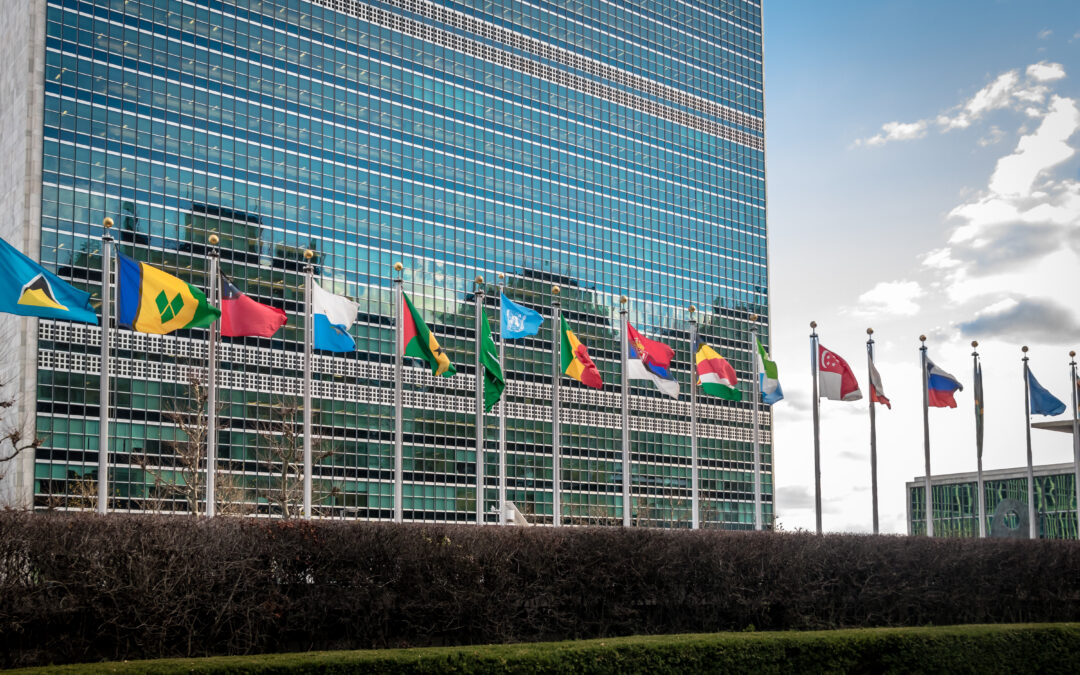
UNGA High-Level Week is the one week of the year when governments, funders, press, and civil society share a few square blocks of Manhattan. Everything is available, and almost nothing is accessible. Official side-event slots inside the UN system are scarce, tightly restricted, and never fully under a civil society organization’s control. Venues near the UN are booked months in advance. The calendar is so dense that a single well-produced event can pass unnoticed.
The instinct is to solve this by getting into an official room. The better answer is architecture.
The architecture: three rooms, one arc
The concept developed for High-Level Week 2027 sequenced three events across the week, each doing distinct work and each building on the last.
Room one opens formally, inside the UN. An official side event at United Nations Headquarters, hosted in partnership with a sponsoring Permanent Mission, held under the umbrella of the Second International Decade for People of African Descent. This is the room that carries institutional weight. It is also the room the client controls least, which is precisely why it cannot be the whole plan.
Room two turns recognition into strategy. A half-day invitation-only convening at a respected civil society venue steps from UN Headquarters, designed as a working session rather than a conference: a framing presentation, moderated regional exchanges, and a closing block that produces something concrete on the day. In this case, a shared statement of intent or a coordination roadmap toward the next cycle of negotiations. Funders active in the space are invited to observe a movement organizing itself, which is the strongest position they can take alongside an organization.
Room three closes at the highest level. A high-level evening convening and reception, hosted by the client, gathering members and allies of the constituency around a single question: how does recognition already won become implementation? A three-hour arc of arrival, a welcome in the client’s own voice, a moderated panel, a recognition moment, and a working reception built for funder and press conversations. Photography and social capture are handed to the communications team the same week.
The logic underneath is control. One room carries the institutional weight of the UN. The other two are fully controlled: produced to the same standard, but entirely the client’s in content, guest list, and voice. That balance is what makes a week ownable, reportable to funders, and repeatable in the years that follow.
The layer beneath the events
The events are the visible layer of an engagement. They are not the whole of it.
Beneath the three rooms sat an evidence and advocacy program: synthesis work with academic partners, negotiator-ready bilingual briefs, a case compendium, and editing support on formal submissions. This is the difference between attending a forum and negotiating in one. A beautifully produced room with nothing to hand the person sitting in it is a photograph, not a position.
Alongside that, mission and venue outreach with parallel candidates held from the outset, so a date never depends on a single room or a single yes. Diplomatic correspondence prepared in the client’s name and sent at the client’s direction. Protocol guidance. Access management inside a security footprint that does not forgive improvisation, built around the client’s own accreditation, which stays with them at every forum.
Language is infrastructure, not a line item.
Every event in the concept was delivered in Portuguese and English throughout, with simultaneous interpretation across Portuguese, English, and Spanish on the floor. Working materials were moved in Portuguese. Calls were scheduled around the client’s working day, not ours.
This is not an accommodation. It is the difference between a delegation that participates and a delegation that leads. The interpretation format also drives real production decisions: full simultaneous coverage requires two interpreters per language booth, plus equipment. At the same time, a smaller working session can run consecutive interpretation at a fraction of the cost. Those choices belong in the design phase, not in a panicked conversation four weeks out.
The week is never the whole season.
The concept did not stop at New York. It opened with the two forums that arrived first: CBD COP17 in Yerevan and UNFCCC COP31 in Antalya, both in late 2026. This is the part of the concept most worth dwelling on, because reading a produced week as a standalone event is the single most common and most expensive mistake organizations make with the multilateral calendar.
This is a pattern in almost every engagement Terra40® builds. A moment in the multilateral calendar is rarely a moment. It is the visible peak of a season, and the work that determines what happens in the room usually happens two forums earlier. New York in September 2027 was designed to carry the outcomes of Yerevan and Antalya to the highest level: a season that ends in Manhattan, presenting results rather than intentions.
Two concepts were developed for those near forums. Both are set out here because they show how a season is read before it is produced.
From Cali to Yerevan: Making Recognition Count. CBD COP17 holds the first Global Review of progress under the Kunming-Montreal framework, operationalizes the Cali Fund, and takes up a Gender Action Plan of its own. It is also the first conference since Cali recognized the role of Afro-descendant communities in protecting biodiversity. That combination creates a narrow, specific opening: a recognition already won, a review mechanism newly alive, and a fund being built. The case to be made is that the Global Review must count the documented stewardship of traditional communities, and that Cali Fund benefit sharing must actually reach the territories doing that work. A concept built for Yerevan exists to put that evidence on the table at the moment the system is set up to receive it.
Holding Belém. At UNFCCC COP31, the language secured at Belém either advances into implementation or quietly stalls. Three fronts decide it: formal presence in the technical spaces of the adaptation and just transition agendas; Gender Action Plan financing that reaches organizations on the ground rather than stopping at the national level; and environmental racism placed on the negotiation agenda rather than beside it. Recognition is a decision. Implementation is a year of unglamorous positioning. A concept built for Antalya is designed around that gap.
Both were developed as strategies before becoming events, which is the order Terra40® works in. The production design that carries each one is built with the client, not published.
Where timing allows, Terra40® opens an engagement with a scouting visit to the host city, so planning rests on local vendors, venues, and interpreters well before the delegation lands.
What this example is meant to show
The specifics here belong to one organization and one agenda. The architecture does not.
The same three-room logic has carried a constituency of 57 organizations across four regions in Santa Marta, Colombia, in direct liaison with the national Ministry of Environment. It shaped an official UN side event, two press conferences, and a two-day strategic convening at UNFCCC SB64 in Bonn that drew a COP Presidency delegation in person. It applies as cleanly to a foundation building a funder table at Climate Week, a research institution launching a report during High-Level Week, or a coalition that needs one controlled room where candor is possible.
What travels between them is the Terra40® method: understand what the forum can actually give you, build one room you do not control and two you do, put something in every hand that leaves, and never dilute the client’s voice to suit the room.
Terra40® helps mission-driven organizations turn presence at the world’s most consequential forums into real influence, without ever diluting their voice to fit the room.
We are the production and strategy infrastructure behind the organizations that advocate. The message is always theirs. The rooms are ours to build.
If your organization is preparing for a major international forum, we would welcome the opportunity to discuss it.
Schedule a Consultation here